

What’s New with TMS for Depression and Other Brain Diseases

Tuesday, April 10, 2018, 2:00 pm EDT
What’s New with TMS for Depression and Other Brain Diseases

In 2008, the FDA approved daily Repetitive Transcranial Magnetic Stimulation (rTMS) for treating depression. Lots of research since then, (some BBRF funded) has now expanded what we know and improved how we use TMS. This talk will cover the latest updates for depression (accelerated forms, new pulse frequencies, maintenance treatment) as well as rTMS in other diseases, not yet FDA approved, like OCD, substance abuse, and autism.

Watch webinar recording:

Please use #BBRFWebinar when sharing or posting about our Meet the Scientist Webinars on social media.

Sign up for other upcoming webinars.

View past webinar recordings.

Presented by 
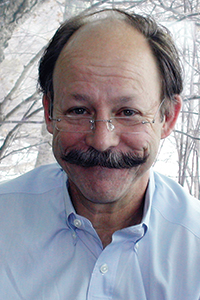
Mark S. George, M.D.

Distinguished Professor of Psychiatry, Radiology and Neuroscience

Founding Director, Center for Advanced Imaging Research

Director, Brain Stimulation Laboratory, Psychiatry

Medical University of South Carolina

Scientific Council Member (joined 2007)

2008 Falcone Prize for Outstanding Achievement in Affective Disorders Research (Colvin Prize)

1998 Independent Investigator Grant

1996 Young Investigator Grant


Mark S. George, M.D., is an expert in the use of brain imaging and stimulation to understand depression and devise new antidepressant treatments. In early research at the NIMH, he was one of the first scientists to expand the study of brain imaging technology for psychiatric disorders. He discovered specific brain changes that activated during normal emotions (orbitofrontal cortex, anterior cingulate, insula, medial prefrontal cortex, amygdala and hippocampus), and began exploring brain changes in depression and mania. This led to his using a noninvasive brain stimulation method, transcranial magnetic stimulation (TMS), for treating patients with treatment-resistant depression, as well as his work with other forms of brain stimulation such as vagus nerve stimulation (VNS), transcranial direct current stimulation (tDCS) and deep brain stimulation (DBS). His BBRF Young Investigator grant helped support his pioneering TMS research.

A RESEARCHER'S PERSPECTIVE: We Are Witnessing a Revolution in Brain Stimulation

December 8, 2022
By Mark S. George, M.D

Moderated by
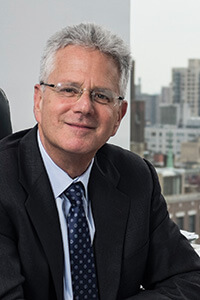
Jeffrey Borenstein, M.D.
Brain & Behavior Research Foundation
 

Jeffrey Borenstein, M.D., serves as the President & CEO of the Brain & Behavior Research Foundation, the largest private funder of mental health research grants. Dr. Borenstein developed the Emmy-nominated public television program “Healthy Minds,” and serves as host and executive producer of the series. The program, broadcast nationwide, is available online, and focuses on topics in psychiatry in order to educate the public, reduce stigma and offer a message of hope. Dr. Borenstein served as Editor-in-Chief of Psychiatric News, the newspaper of the American Psychiatric Association from 2012 - 2023.

Dr. Borenstein is a Fellow of the New York Academy of Medicine and serves as the Chair of the Section of Psychiatry at the Academy. He also has served as the President of the New York State Psychiatric Association. Dr. Borenstein earned his undergraduate degree at Harvard and his medical degree at New York University.